Public Domain
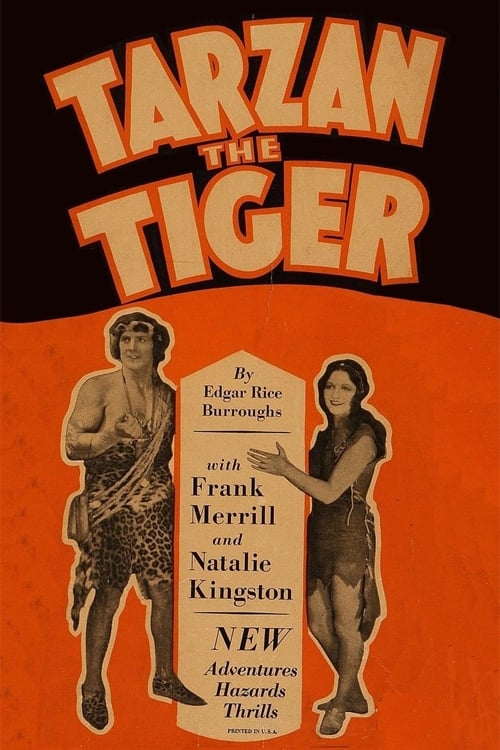
Tarzan the Tiger
1929 · Universal Pictures · Dir. Henry MacRae
After Tarzan's estate is destroyed by Arabs Jane is sold into slavery by a man posing as a friendly scientist. Tarzan develops amnesia after a blow to the head. When he recovers his memory (from a later blow) he defeats the villain, recovers the fabulous jewels of Opar, and rescues Jane.
Confidence
95
— Legal Reasoning —
Why this status applies
Tarzan the Tiger was a 15-chapter movie serial produced by Universal Pictures and released starting in November 1929. Under the Copyright Act of 1909, works from this era were granted an initial 28-year term of protection, which could be extended for a second term if a renewal was filed with the U.S. Copyright Office during the 28th year of the original term.
Research indicates that while the serial was originally registered by Universal (Reg. Nos. LP824, LP832, LP857, LP873, LP886, LP908, LP927, LP945, LP970, LP996, LP1017, LP1036, LP1055, LP1069, LP1089), a search of the Stanford Copyright Renewal Database and the Library of Congress Catalog of Copyright Entries (CCE) reveals no renewal filings for these registrations in 1956 or 1957. As a result of this failure to renew, the film entered the public domain in the United States upon the expiration of its first term in late 1957. The work is widely recognized as public domain by film historians and is frequently distributed by public domain specialists such as Alpha Video and is available on the Internet Archive without restriction.
Note: generated without live web grounding (the grounded research engine was unavailable). Verify the cited sources independently before relying on this determination.
— Cited Sources —
Supporting facts
- Stanford University Copyright Renewal Database (1950–1959)
- Library of Congress Catalog of Copyright Entries (CCE), Motion Pictures 1912–1939
- Film Superlist: Motion Pictures in the U.S. Public Domain (1894-1939)
- AFI Catalog of Feature Films
Research summary based on cited sources, not legal advice. Always consult a qualified copyright attorney before commercial use.