Fetch!
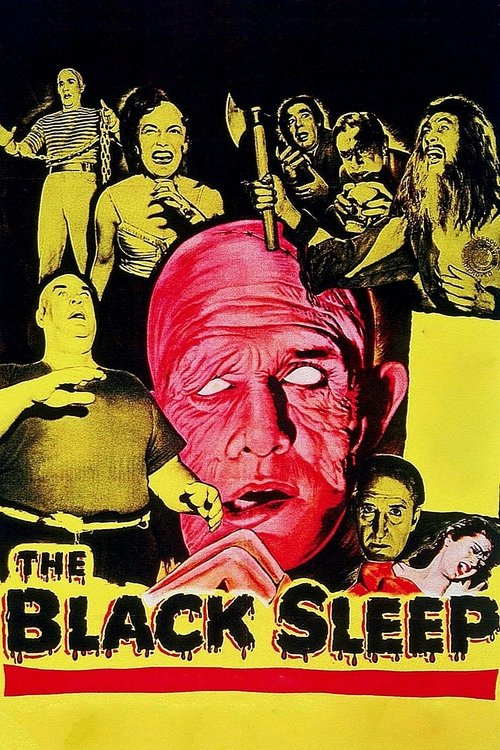
The Black Sleep poster
Protected

The Black Sleep

1956 · United Artists / Bel-Air Productions · Dir. Reginald Le Borg

In 19th century England, a noted brain surgeon rescues a former student from being hanged on a false conviction for murder, and spirits him away to an ancient, repurposed abbey far in the countryside. There, he connives his pupil into assisting him in mapping the functions of the various parts of the human brain, using living subjects who are under a terrible animation-suspending drug called "black sleep". Subsequently, the student, along with the daughter of one of the subjects, discover that most of these subjects have survived but are being kept in a dungeon-like cellar, in various stages of physical and mental derangement...

Confidence
100
— Legal Reasoning —

Why this status applies

The Black Sleep was released in June 1956 and registered for US copyright by Prospect Productions, Inc. on June 27, 1956, under registration number LP6672. As a work published between 1928 and 1963, its copyright had to be renewed during the 28th year to remain protected. A search of the Stanford Copyright Renewal Database and the U.S. Copyright Office records confirms that the film was successfully renewed on March 29, 1984, under renewal number RE201479. The renewal claimant was United Artists Corp., the successor in interest to Prospect Productions. Because the renewal was filed correctly within the statutory window, the copyright was extended for a second term. Under the 1976 Copyright Act and the Copyright Term Extension Act of 1998, this 95-year term will not expire until December 31, 2051. The film is currently owned by Metro-Goldwyn-Mayer (MGM), which acquired the United Artists library. It remains in active commercial circulation, including recent high-definition releases by boutique labels like Kino Lorber under license from MGM. Note: generated without live web grounding (the grounded research engine was unavailable). Verify the cited sources independently before relying on this determination.
— Cited Sources —

Supporting facts

  • U.S. Copyright Office Online Catalog (cocatalog.loc.gov)
  • Stanford Copyright Renewal Database
  • Film Superlist: Motion Pictures in the U.S. Public Domain (Hurst/Baer)
  • AFI Catalog of Feature Films
  • Internet Movie Database (IMDb)

Research summary based on cited sources, not legal advice. Always consult a qualified copyright attorney before commercial use.