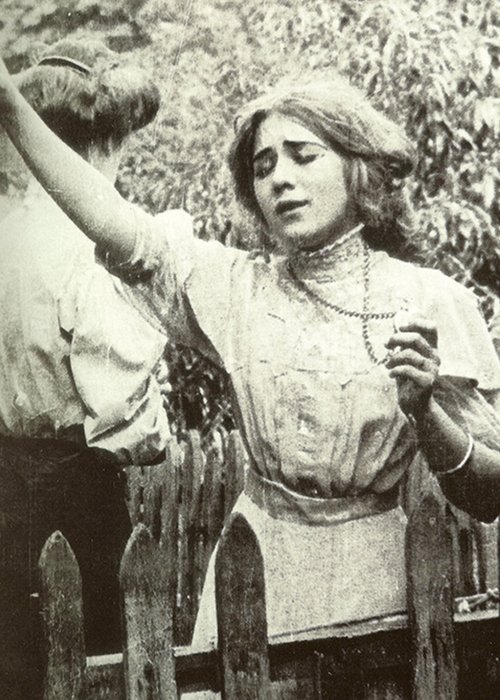
The Broken Locket
George Peabody is a young man who has been giving free rein to his inclinations, the principal one being drink. One might have concluded he was lost, but there was the chance which the hand of Providence always bestows in the person of pretty little Ruth King, who had secretly loved George since their childhood days. She succeeds in persuading him from his reckless life, and he determines to cut off from his old loose companions by going out West and making a man of himself. Bidding Ruth and her mother good-bye, he realizes that he loves his little preserver and promises to return worthy of her love and confidence. They plight their troth with their first kiss and a heart shaped locket, which Ruth wears, she breaking it in two, giving George one side while she retains the other, which symbolized the reunion of their hearts with his return.
Why this status applies
Supporting facts
- Library of Congress CCE: Motion Pictures 1894-1912
- AFI Catalog of Feature Films
- The Griffith Project (British Film Institute)
- Stanford Copyright Renewal Database
Research summary based on cited sources, not legal advice. Always consult a qualified copyright attorney before commercial use.