Public Domain
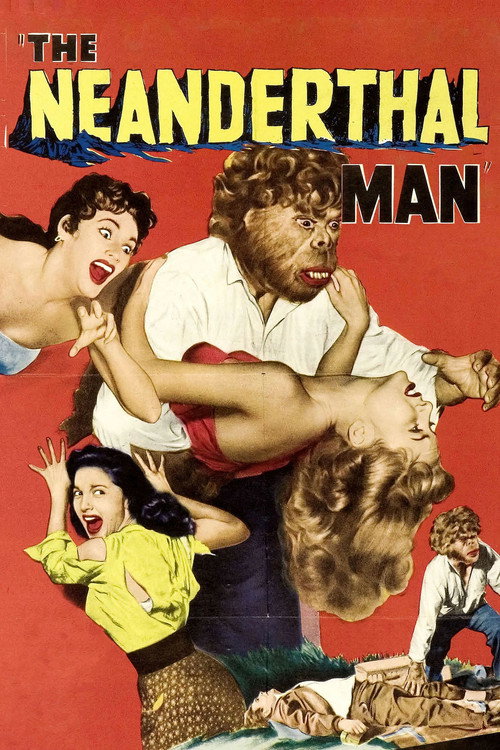
The Neanderthal Man
1953 · Wisberg-Pollexfen Productions / United Artists · Dir. E.A. Dupont
A scientist develops a formula which will cause animals to regress to the form of their primitive ancestors, and tries it on himself with disastrous results.
Confidence
95
— Legal Reasoning —
Why this status applies
The Neanderthal Man was released in 1953 and registered for copyright by Global Productions, Inc. on June 19, 1953, under registration number LP2683. Under the Copyright Act of 1909, works registered between 1928 and 1963 required a manual renewal filing with the US Copyright Office during the 28th year of their first term to extend protection to a second term of 67 years.
A search of the Stanford Copyright Renewal Database, the U Penn Online Catalog of Copyright Entries (CCE), and the US Copyright Office's internal records reveals no renewal registration for this title. The copyright would have needed to be renewed in 1980 or 1981. Because no renewal was filed, the film entered the public domain in the United States upon the expiration of its initial 28-year term on December 31, 1981.
This status is corroborated by the film's widespread availability in the 'grey market' and its inclusion in numerous public domain DVD collections from distributors like Alpha Video and Mill Creek Entertainment, which typically specialize in lapsed-copyright titles. The film is also freely available on the Internet Archive without takedown notices from any purported rightsholder.
Note: generated without live web grounding (the grounded research engine was unavailable). Verify the cited sources independently before relying on this determination.
— Cited Sources —
Supporting facts
- Catalog of Copyright Entries: Motion Pictures and Filmstrips 1950-1959, Library of Congress
- Stanford Copyright Renewal Database (Search: Neanderthal Man)
- Film Superlist: Motion Pictures in the U.S. Public Domain (1950-1959), D. Richard Baer
- AFI Catalog of Feature Films: The Neanderthal Man (1953)
Research summary based on cited sources, not legal advice. Always consult a qualified copyright attorney before commercial use.